
Blobs in space

As part of a NASA-ESA joint mission, on 11th of August, 2021, a 500-year-old 'Blob' was taken into orbit, aboard the Cygnus spacecraft which is an experiment by school students organized by a French astronaut Thomas Pesquet. The Blob is a Physarum polycephalum, a kind of slime mold that has always fascinated scientists worldwide. It first appeared on earth about 500 million years ago and is still an unclassifiable, yet fascinating organism known to have defied basic Biological principles.
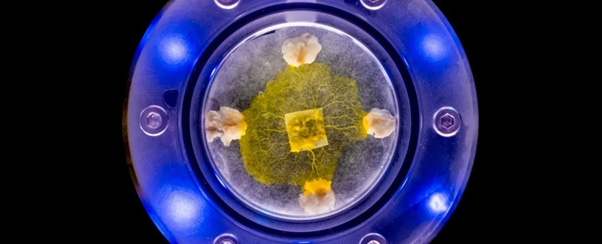
The Blobs that were sent to space
It is a multinucleated, unicellular organism with no ability to procreate but, it can eat, grow and move. Its behavior in a microgravity environment will be studied aboard the ISS more exclusively.
Blobs were a crucial part of the evolution of life in the early years. So this experiment will help in understanding the key differences between how such a unique organism behaves in a microgravity environment and earth, which could be useful for further scientific breakthroughs especially relating to organisms' behavior in space.
References:
The Hindu Newspaper